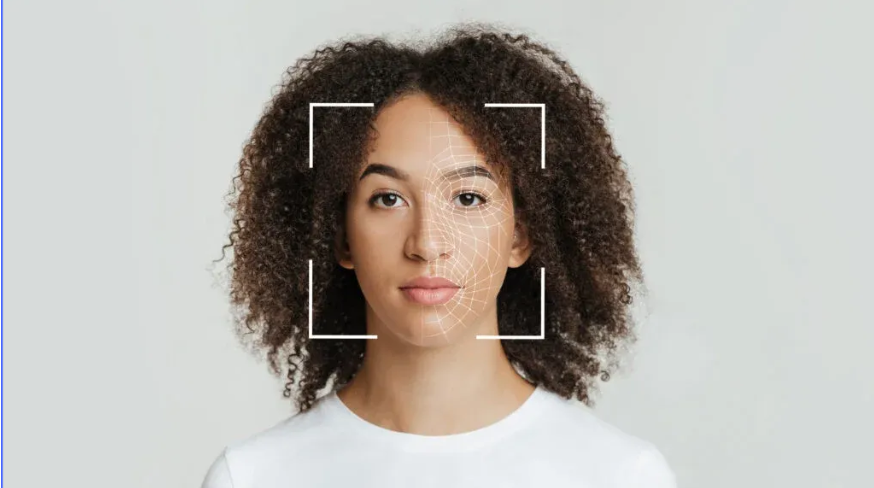
Australia's surge in scams reveals cost is far greater than financial losses.

Australia's surge in scams reveals cost is far greater than financial losses. 

By Rowena Valeria Carpio, Thomson Reuters


Regulatory Intelligence Analysis

Speakers at the recent Scams Summit in Australia expressed a unified sentiment on several pressing concerns regarding the A$3.1 billion per-year problem of financial scams. These include the rise in financial scams driven by the surge in online marketplaces, as well as the shift to the New Payments Platform (NPP).

With the growth in NPP use, the faster settlement service (FSS) has further facilitated fraud due to its immediate nature, allowing fraudsters to move illicit funds instantly in a low-friction payments environment. Also crucial among these concerns were the need for greater government support to raise awareness of scams and the psychological impact on victims, a cost that may be unconsidered in many fraud conversations.

Rob Neely, founder and managing director of Sell Securely in Australia, made an urgent appeal to the government to revisit the 2022 scam report released by the Australian Competition and Consumer Commission (ACCC). There was a need to correlate it with other institutions’ findings, and issue an immediate call-to-action, he said.

In April 2023, the ACCC said Australians had reported A$3.1 billion in losses due to scams in the 2022 financial year. Research from Securely found this may be the tip of the iceberg.

“Our research findings told a completely different story. It found what the government didn’t know and that is, two in three Australians have been scammed and didn’t report it,” Neely said.

“So, it follows that the A$3.1 billion that they were talking about may actually be A$9.3 billion.”

To show the impact of A$9.3 billion within the Australian context, Neely compared it to the size of Qantas and furniture retailer Harvey Norman’s revenue. In relation to Australia’s GDP, the amount is “just under 1%.”

The potential scale of losses suggests that, at the very least, Australians are losing A$60 million per week to scams based on the A$3.1 billion figure. Neely said Australians could be losing A$178 million a week, according to Sell Securely’s data.

Amid these losses, the government committed A$86 million to crack down on scams.


Government engagement

Neely immediately sought an audience with Stephen Jones MP, assistant treasurer and minister for financial services, and the head of ACCC’s National Anti-Scam Centre (NASC), to align information from both sides. He sought to develop action steps that could close the gap between the amount and frequency of scams and the productive interventions from all sectors, led by the government.

None of Neely’s repeated attempts to hold a meeting with the minister or the head of NASC ever succeeded, however. He was once in a meeting with a representative of NASC and pointed out the agency’s lack of understanding of the magnitude of online scams, especially through Meta-owned companies, such as Facebook.

“What was alarming … they had no idea what was going on in F

A person is holding a piece of paper that looks like a unicorn.
By Rob Neely May 5, 2025
Securely announces $6m(USD) Series A begins mid May. Five years ago, our founder set out to solve a real-world problem: Scams. He wasn’t a fintech expert — but he knew the problem was real. So, he built a team. People who could help him turn the idea in his head into something that could move markets. A couple of years in, we had an MVP live and we caught the attention of bankers in Australia. That was a sliding doors moment. What started as us becoming a launch customer for a new bank product ended up being a turning point — it gave Rob deep, first-hand access into how bank payment rails really work behind the scenes and that’s where he had a eureka moment. A moment Elon Musk has talked about, but still hasn't achieved — connecting social media profiles to bank accounts. Why does it matter? Because 8 out of 10 scams today start on social media. Because scams are now a $1 trillion dollar problem every year. And here’s what he realised: Everyone was looking at it from the wrong end. Instead of asking Facebook to clean up fake profiles — banks could step up. Banks could offer their customers verified digital identities tied directly to their accounts. We searched the globe. No one was offering it. No one had even patented it. So we did! Our patent was lodged in 2023 — published in April 2025 — and it’s on track to be fully granted within six months. And the market size? Seventeen billion transactions a year happening on peer-to-peer marketplaces — and virtually no formal payment rail in sight. For banks, it's a game-changer: It protects up to $3.5 trillion dollars in deposits from bleeding into third-party apps. It makes customers safer. It strengthens trust. And — who would’ve thought — it might even be a service they can charge for. In the last 6 months, we’ve won fintech and payment awards in New York and Berlin. We’re now being talked about as Australia’s next tech unicorn — and maybe even the next PayPal. But to get there, we don’t just need cheques. We need doors opened. We need strategic partners. We need smart capital. We've already started global conversations with banks in US, Latam, India and the EU — and we’ve only been commercialising for six months. And we’re not a one-trick pony either. We hold three patents, with a fourth on the way. We’re now raising our first external round — a Series A. If you can help this little Aussie scale-up go global — We'd love to talk.
By Rob Neely April 19, 2025
Noosa based Securely Group takes MPE 2025 by storm – named Best Startup Innovation in Berlin Germany!
A logo for the us fin tech awards that says innovator of the year winner
By Rob Neely March 3, 2025
This is a subtitle for your new post
By Rob Neely February 28, 2025
Exciting News!